
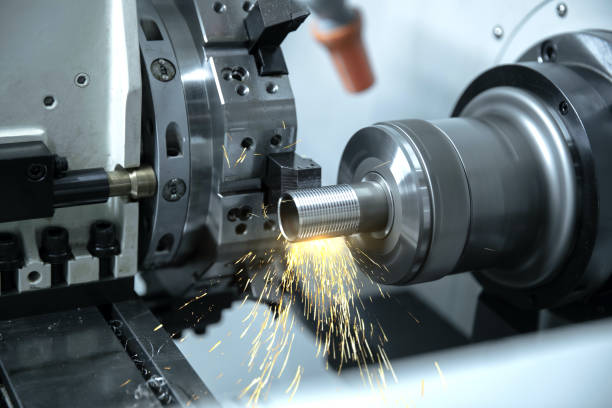
Finishing techniques can transform a good part into a great one, especially for builds with challenging geometries. In Alabama, companies pushing the limits of CNC machining have introduced advanced surface finishing methods that refine parts for aerospace, medical, and robotics industries. These breakthroughs don’t just enhance looks—they improve performance, reliability, and lifespan in ways that often go unnoticed by casual observers.
Advanced Polishing Techniques for Intricate Medical Device Parts
Medical devices demand extreme precision, but it doesn’t stop at the machining stage. Advanced polishing techniques ensure instruments and implants are smooth enough to meet both functional and hygienic standards. Using controlled polishing systems, technicians can refine surfaces at microscopic levels, removing tool marks and minimizing friction in moving assemblies. This level of polishing also reduces contamination risk, a critical factor for devices used in surgical environments.
An Alabama robotics engineering company applying these methods can deliver parts with a mirror-like finish that also meets regulatory expectations. This capability is especially useful in producing orthopedic implants or dental components where comfort, durability, and safety intersect. CNC machining in Alabama now integrates polishing directly into production workflows, cutting down turnaround times while ensuring every part meets exacting industry standards.
Micro Finishing Methods for Aerospace-grade CNC Builds
Aerospace components face extreme stress, so surface quality becomes just as important as structural strength. Micro finishing allows manufacturers to reach surface tolerances that reduce drag, improve fatigue resistance, and ensure tight fits in complex assemblies. Specialized abrasives and micro-tooling techniques give wings, engine housings, and turbine parts the resilience needed for flight.
Alabama CNC machining facilities that specialize in aerospace often combine these finishing practices with automated quality checks. This pairing ensures that every piece is consistent, which is essential in such a high-risk industry. By adopting micro finishing, an Alabama robotics engineering company can supply aerospace manufacturers with components that not only meet mechanical specifications but also extend service life through reduced wear.
Surface Texturing Innovations That Improve Component Performance
Smooth finishes are not always the goal—engineers sometimes want texture to enhance grip, adhesion, or lubrication. Modern texturing methods create microscopic patterns that allow fluids to move efficiently across surfaces or provide traction in mechanical systems. These textures are engineered intentionally rather than being the byproduct of machining marks.
For Alabama CNC machining operations, this innovation opens doors in robotics and industrial applications. Textured surfaces can improve grip for robotic arms, reduce wear in moving joints, or provide controlled friction for precision systems. This approach goes beyond aesthetics, creating a deeper integration between function and surface design.
Hybrid Finishing Combining CNC Precision with Additive Enhancements
Hybrid finishing blends CNC machining with additive processes, producing parts that benefit from both worlds. After subtractive machining defines the geometry, additive techniques such as laser cladding or thin-film coatings apply surface improvements. This results in stronger resistance to corrosion, wear, or environmental damage.
An Alabama robotics engineering company adopting hybrid finishing can manufacture robotic components or defense-grade parts with custom-tailored surfaces. Coatings applied with additive enhancements bond seamlessly with CNC-machined bases, producing results that outlast traditional finishing methods. The combination ensures durability while keeping dimensional accuracy intact.
Ultra-fine Abrasive Treatments for Complex Geometries
Some builds feature curves, cavities, and intricate shapes that are notoriously difficult to finish. Ultra-fine abrasive treatments—using slurry, bead blasting, or controlled flow finishing—reach into these areas without compromising the integrity of the material. These methods smooth internal channels, polish hidden recesses, and refine delicate contours that standard polishing cannot reach.
This is particularly valuable for Alabama CNC machining serving medical and aerospace industries, where hidden imperfections can lead to failures. For robotics, ultra-fine treatments allow internal passages or housings to remain smooth, reducing the risk of contamination or friction. By adopting these treatments, an Alabama robotics engineering company ensures every detail of a part performs as intended.
Automated Deburring Systems Reducing Manual Finishing Needs
Manual deburring has long been a time-consuming step in part finishing, but automation has changed the process dramatically. Automated deburring systems use robotic arms, precision brushes, and abrasive tools to remove sharp edges and leftover material consistently. This reduces variability and speeds up production cycles while keeping quality high.
Alabama CNC machining operations benefit from these systems by reducing labor costs and eliminating bottlenecks. For industries like robotics and defense, where consistency and safety are critical, automated deburring ensures parts are reliable from the first batch to the last. It also frees skilled technicians to focus on more complex finishing tasks that cannot be automated.
Multi-axis Finishing Improving Uniformity on Curved Surfaces
Curved surfaces, such as housings, casings, or turbine blades, demand uniform finishing to maintain both performance and appearance. Multi-axis finishing systems, often integrated with CNC machines, allow polishing and texturing across all angles of a part. This prevents inconsistencies that can occur when parts are rotated or repositioned manually.
An Alabama robotics engineering company equipped with multi-axis finishing can deliver complex parts that meet aerospace and medical standards with remarkable uniformity. The ability to finish surfaces across several axes ensures smoother aerodynamic profiles, better fit in assemblies, and a higher overall performance standard.
Laser-assisted Surface Finishing for Intricate Detail Work
Laser-assisted finishing is one of the latest breakthroughs, using controlled energy beams to smooth or texture surfaces at microscopic scales. Unlike traditional methods, lasers can selectively target specific areas without affecting the rest of the part. This makes it ideal for intricate geometries, delicate edges, and high-detail work in aerospace, medical, and robotics components.
For Alabama CNC machining providers, laser-assisted finishing offers both precision and versatility. Parts can be processed faster, with less waste, and with improved repeatability. A robotics engineering company in Alabama using this method can deliver components with unmatched surface quality, ideal for sensitive assemblies where performance and precision come together.