
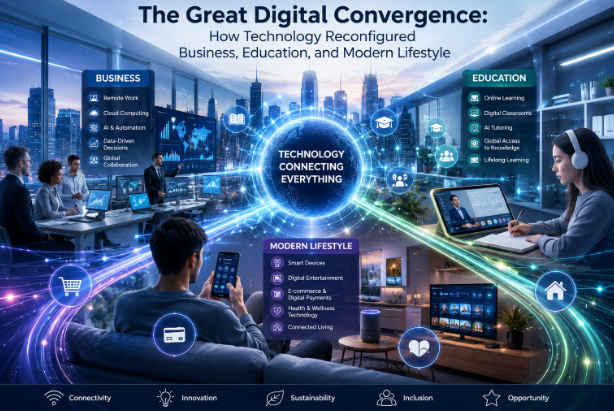
The modern world is experiencing a digital shift so profound that the boundaries between physical reality and virtual space are blurring faster than ever before. A few short years ago, the internet was widely viewed as a simple tool for communication a place to send electronic mail, check casual news updates, or read static articles. Today, however, the global digital ecosystem has matured into the foundational infrastructure of human society. It actively drives international commerce, restructures traditional educational institutions, dictates corporate strategies, and fundamentally shapes daily human habits. From the deployment of complex machine learning models in classrooms to hyper-personalized retail platforms, everything is interconnected within an expansive, mobile-first reality that demands constant adaptation.
The Evolution of On-Demand Mobile Entertainment
This rapid digital transformation has also completely re-engineered how humans seek leisure, visual stimulation, and mental relaxation online. Because modern life operates at an intense, high-speed pace, people no longer have the luxury or the desire to sit in front of bulky desktop computers or wait for television broadcasts to unwind after an exhausting day of work. The contemporary consumer demands instant gratification, absolute mobility, and high-quality interactive entertainment. In response to this demand, the mobile gaming and digital recreation industries have undergone a massive evolution.
While navigating the dense pressures of daily professional responsibilities, millions of internet users now routinely turn to their mobile devices to access high-speed interactive entertainment. Among the most popular choices are dynamic gaming hubs, where users can instantly experience the thrill of a top-tier slot gacor platform that has been flawlessly optimized for mobile screens and touch-based gameplay. This seamless accessibility to premium digital amusement highlights a broader societal shift: entertainment is no longer a destination you travel to, but a pocket-sized sanctuary available at any given second.
Hyper-Personalization as the New E-Commerce Gold Standard
As this on-demand culture cements itself in our daily routines, businesses worldwide are realizing that conventional, one-size-fits-all operational models are completely obsolete. In the highly competitive world of e-commerce, generic storefronts that display the exact same product catalog to every visitor are rapidly losing market share. The new gold standard of digital commerce is hyper-personalization driven by predictive analytics. By implementing sophisticated machine learning algorithms, modern retail websites can track, interpret, and predict consumer behavior in real-time.
The system automatically evaluates previous search history, localized data, exact clicking patterns, and estimated purchasing power within milliseconds of a user landing on the page. Consequently, two different people opening the exact same e-commerce app will see entirely different product recommendations, promotional banners, and price structures tailored to their unique psychology. This level of data-driven intimacy not only maximizes immediate transaction numbers but also fosters long-term brand loyalty by making the consumer feel genuinely understood.
The High-Stakes Battleground of Organic Search Optimization
Simultaneously, achieving visibility within this crowded digital landscape has become the ultimate battlefield for local and international enterprises alike. While paid advertising can grant temporary visibility, it is incredibly expensive and unsustainable as a sole growth strategy. This reality has forced a massive resurgence in the importance of Search Engine Optimization (SEO). Business owners are moving away from short-term marketing gimmicks and are investing heavily in comprehensive, organic search strategies.
Partnering with professional SEO agencies is no longer viewed as an optional luxury for tech companies, but as a survival necessity for traditional businesses, including local service providers and niche suppliers. Through rigorous keyword research, deep website optimization, high-speed performance tuning, and the creation of authoritative content, businesses can secure coveted organic rankings on the first page of search engine results. When a local business becomes the top answer to a user’s spontaneous online query, it establishes immediate authority and captures high-intent customers without draining its capital on repetitive paid ad campaigns.
Redefining Classrooms Through Cloud Ecosystems
The winds of digital transformation are blowing just as fiercely through the halls of global education. The traditional concept of a classroom—defined strictly by four physical walls, a chalkboard, and printed textbooks—has evolved into a hybrid, cloud-based learning ecosystem. Modern academic institutions utilize advanced Learning Management Systems (LMS) and comprehensive digital portals to manage everything from student enrollment to real-time performance tracking. Educational associates, teachers, and students can interact asynchronously across different time zones, making high-quality knowledge accessible to anyone with a stable internet connection.
Artificial intelligence tools within these educational platforms can automatically grade assignments, identify specific learning gaps in individual students, and generate custom-tailored study modules. This democratization of information ensures that an eager learner in a remote, underdeveloped region can access the exact same academic resources and professional training guides as a student in a major metropolitan hub.
Navigating the Frontier of Digital Wellness
Furthermore, this continuous immersion in the digital world has sparked a powerful counter-movement centered around digital wellness and holistic health tracking. As individuals spend more hours interacting with screens, keyboards, and virtual environments, they are becoming increasingly aware of the need to protect their physical and mental well-being. The modern health movement has shifted from basic gym routines to comprehensive lifestyle management powered by mobile technology.
People regularly utilize specialized mobile applications to calculate their daily posture, practice guided mindfulness to combat digital burnout, track sleep cycles disrupted by blue light, and discover organic nutritional plans. Instead of viewing technology as a source of stress, conscious consumers are actively converting their smartphones into personal health coaches, using automated reminders and data tracking to maintain equilibrium in an increasingly chaotic, hyper-connected world.
Ultimately, we are living in an era where technology is no longer an external tool we use, but an invisible fabric woven into every facet of human existence. The survival of businesses, the effectiveness of education, and the psychological health of individuals depend entirely on how effectively we navigate this digital wave. The organizations and individuals who thrive are not those who resist change, but those who fluidly adapt to these digital realities—embracing search engine optimization, utilizing data-driven personalization, enjoying modern mobile entertainment responsibly, and leveraging the endless streams of information to build a smarter, more connected global community.